What time to visit a Parmigiano dairy: be there by 9
Car, or no car?A dairy visit booked direct costs €15–35. What the tours below sell is the ride out to the dairy by 9am, and the ham and balsamic stops.
Compare all sevenWhat the rules say about the clock
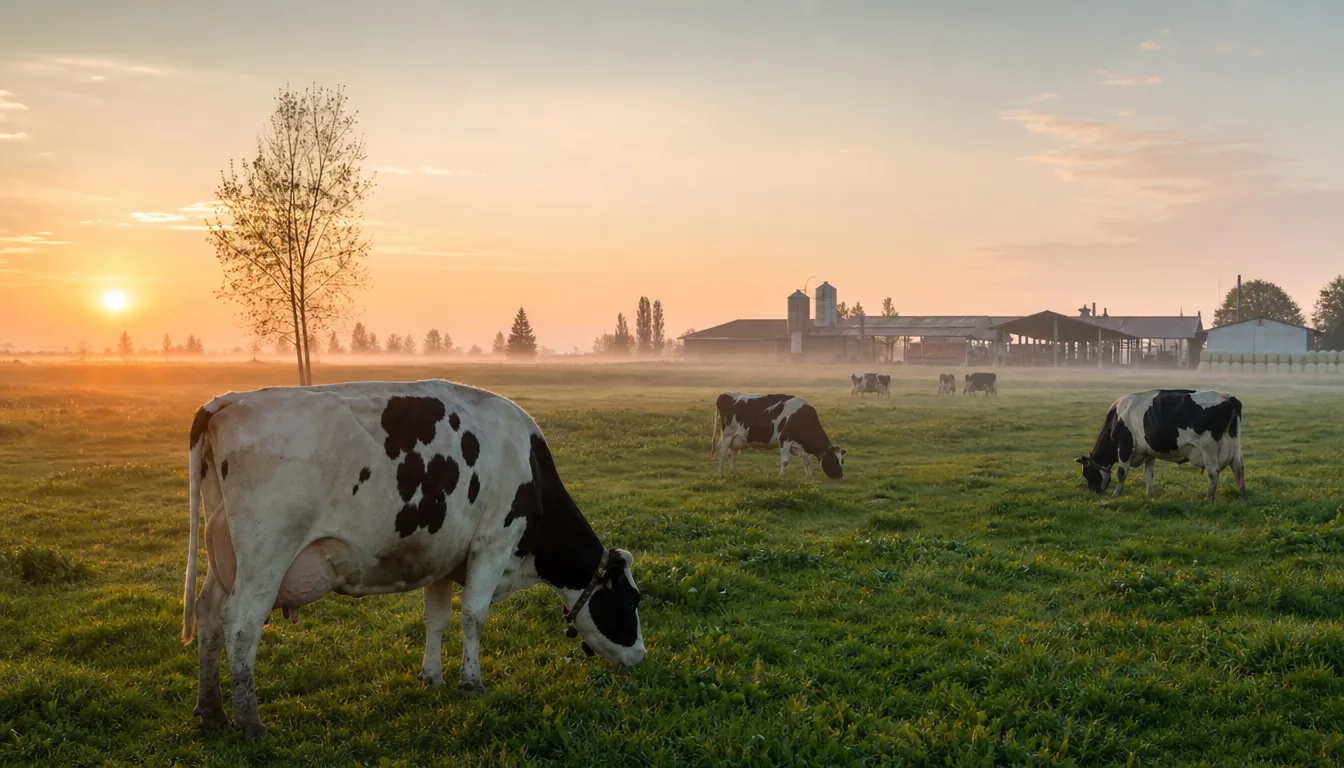
My grandfather made cheese in the hills south of Parma, and his rule for anyone who wanted to watch was short: come at dawn or you will see nothing. The production rules say the same thing more formally. The disciplinare has the evening and morning milk delivered raw within two hours of milking, and it requires coagulation, breaking the curd, cooking and settling to be “performed by the end of the morning”. The copper vats are used once a day. There is no afternoon batch to catch.
The extraction is the moment
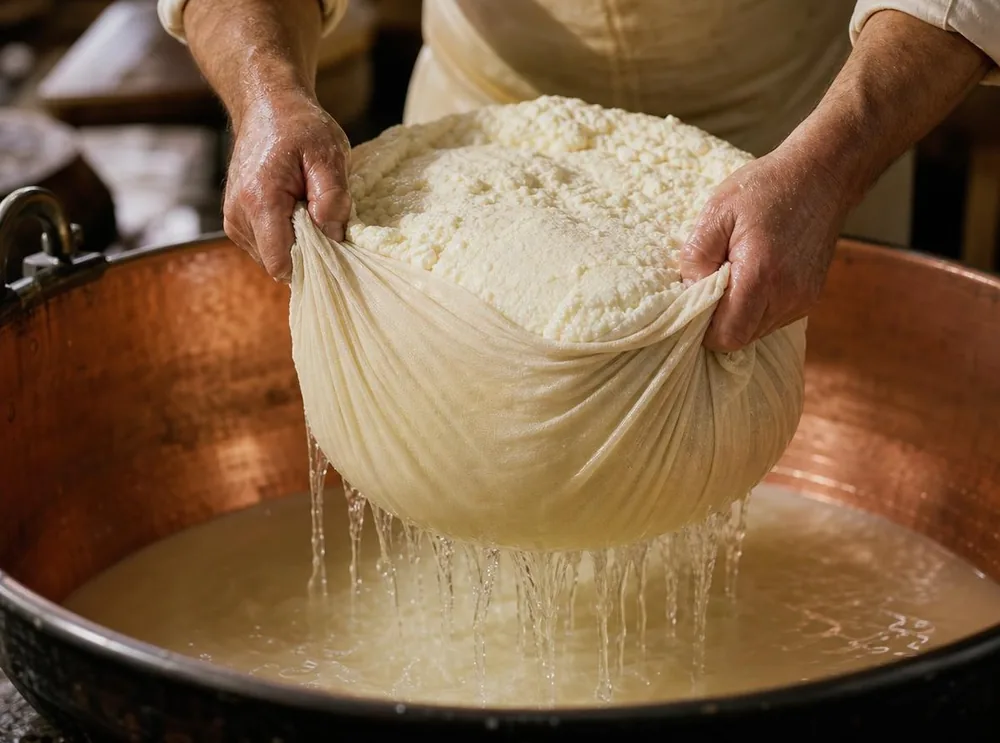
After the curd has cooked and settled on the bottom of the vat, the cheesemakers lift the whole mass out in linen cloths, cut it in two and put each half into a mould. That lift is the extraction, and it is what people remember. Everything before it is a vat of milk slowly changing; everything after it is a wheel waiting. A reviewer on the most-booked tour, John from Germany, put the whole of this page in five words: “Go early. You see cheese come out of vats.”
If you want the full sequence from the milk to the aging room, I have written it out on how Parmigiano Reggiano is made.
9:00 against 11:00 at the same dairy
The clearest example I have found is Caseificio San Pier Damiani in San Prospero, and I give it as an example rather than a recommendation. Its “Full Experience” starts at 9:00, Wednesday to Sunday, lasts about an hour and a half, covers every stage of production and costs €25 with tasting. The dairy says to be there from 9:00 to see the whole cycle. Its 11:00 “Experience”, on Mondays and Saturdays, misses the first stages and does not include the extraction.
Even two morning slots at one dairy can differ. At Caseificio Ugolotti in Parma, the first slot shows the early milk stages and the second shows that morning’s wheels being extracted. So when you book, read the listing for what each slot shows, not only its time.
What you still see if you arrive late
Still there at 11
- The brining room, where the young wheels take their salt
- The aging warehouse and its shelves of wheels
- The tasting, and the dairy shop
- At some dairies, an explanation with a guide and a video
Already over
- Milk in the copper vats
- The curd being broken and cooked
- The extraction, lifting the cheese out in linen
- The new cheese going into its moulds
4 Madonne says it plainly: production happens in the morning, and in the afternoon it is explained with a guide and video. That is a pleasant hour, and the tasting is the same cheese, but it is not the reason most people drive out. One practical note while you are there: the aging rooms are not necessarily cold. The rules set a summer minimum of 16 °C, so you do not need a coat for them.
Which days
The Consorzio says the cheese is made every day. Visits are another matter, and they vary by dairy. 4 Madonne takes visitors every day by reservation. San Pier Damiani runs its 9:00 visit Wednesday to Sunday only. Ugolotti has a December exception that its two sources describe differently: Sundays only, or no visits all month. I could not confirm whether any dairy makes cheese or takes visitors on Christmas Day. What holds everywhere is that you book, and you never assume a dairy is open because it is a weekday. The booking side is on visiting a dairy without a tour.
On a tour, the start time is the product
Tours start early for the same reason: the cheese is made early. Three of them, including the most-booked tour with pickup and drop-off, state that arriving late counts as a no-show, “non-refundable and non-reschedulable”. Take that seriously. The free cancellation up to 24 hours before does not cover oversleeping. The Parma departures are compared on tours from Parma.
 Cheapest near Parma
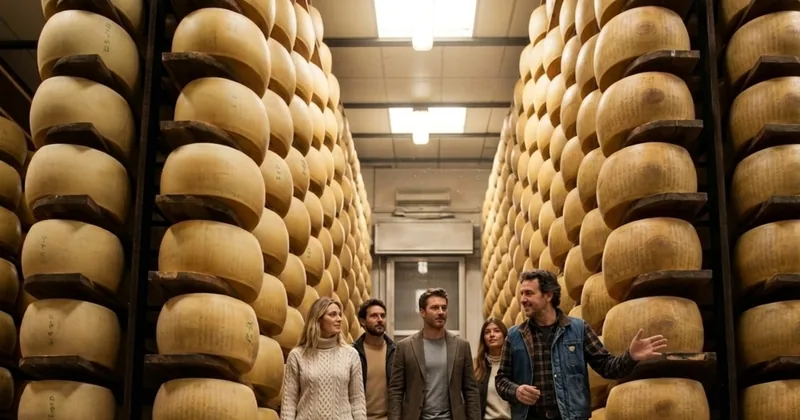
From Milk to Wheels: Parmesan Tour & Tasting in Parma
 Dairy only
Parma: Traditional Cheese Factory Visit with Tasting
 Most booked
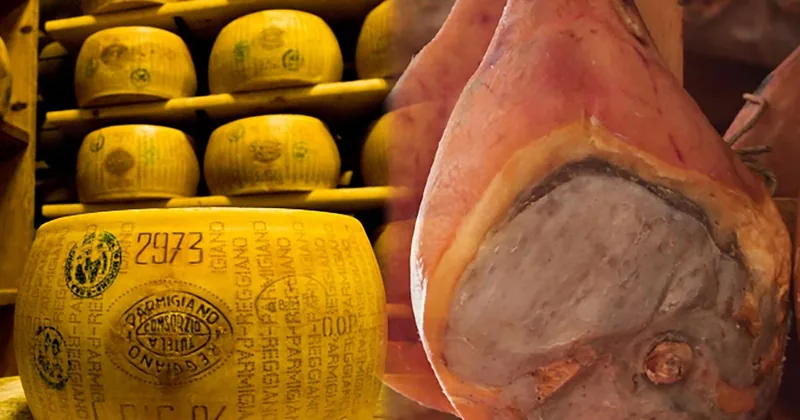
Parma: Parmigiano Production and Parma Ham Tour & Tasting
Frequently asked questions
What time is Parmigiano Reggiano made?
In the morning. The production rules require coagulation, breaking the curd, cooking and settling to be done by the end of the morning, and the vats are used once a day. To see the wheels lifted out of the vats, be at the dairy by about 9:00.
Can I visit a Parmigiano dairy in the afternoon?
You can at some dairies, but you will not see cheese being made. An afternoon visit shows the brining room, the aging warehouse and the tasting; one dairy explains production with a guide and a video instead.
Are Parmigiano dairies open for visits every day?
Not all of them. The cheese is made every day, but visiting days vary: 4 Madonne takes visitors every day by reservation, San Pier Damiani runs its 9:00 visit Wednesday to Sunday only, and Ugolotti has a December exception. Always book ahead through the Consorzio page.
What happens if I am late for a Parmigiano tour?
On three of the GetYourGuide tours, including the most-booked one, a late arrival counts as a no-show and is non-refundable and non-reschedulable. Free cancellation applies only up to 24 hours before the start.